
Author's Preface
Immediately, the restaurant bathroom is thrown into chaos.
“What was that?” Lucienne exclaims.
“Where is she going?” Pansy cries, hands in her hair.
“Shit,” I swear. “Shit, shit, shit, fuck, shit.”
I am on damage control now. I burst out of the bathroom just in time to see my mom’s bright green gown vanish out of the restaurant’s front door. Every other guest had turned to watch her, and as soon as I step out, their heads swivel towards me. “Pansy, Luci, follow her,” I tell my friends, then look around frantically for Edgar.
Fortunately, he has not gone far. He is exactly where Mom left him—standing awkwardly in front of the table of two, the bouquet of flowers drooping out of his hand. He is shellshocked.
I hurriedly usher him to sit down again. It takes me sitting down in the chair meant for Mom until he seems to understand what I have asked him to do.
“What just happened?” he murmurs.
“I…I don’t know,” I tell him.
“You said she would be excited to see me. Not—whatever that was.”
“I don’t know what that was! Look, Your Highness, it’s been eighteen years. My m—maybe…Imogen is just surprised, and didn’t know how to react.”
“This is a fucking disaster,” Edgar groans, slumping onto the table. “I was right. She hates me.”
“She doesn’t hate you. Ugh. Wait here, and I swear, if you drink yourself to death, I’ll quit.”
I leave him to mope at the table and head outside, hoping that Mom has not gone far. Fortunately, she hasn’t, and I find her, Lucienne, and Pansy on a nearby street corner, under a formidable statue of King Edwinn III. My mother is slumped down on a stone bench, bent over at the waist. I resist the urge to call out for “Mama”—since I cannot guarantee Edgar will not overhear it—and just make my way towards as quickly as I can without causing a scene. A scene is the last thing I wanted to create today. And yet, scene.
I kneel down in front of her, taking her hands in my own. “Hey,” I begin, glance over my shoulder, and then continue, my voice low, “Mama, what’s the matter?”
Her shoulders are still shaking. Tears stream freely down her face. There is nothing I can do except wait for the storm to pass and squeeze her hands to remind her that I am here. She tries to speak a couple of times, but the attempt soon collapses into another, racking sob. The sky above is darkening. The sun has set. Soon, but not soon enough, the streets will empty, and the curious prying eyes of passersby will no longer be around to stare at my mother, which only serves to worsen her sorrow. But as the cold begins to creep in with the darkening of the hour, she shivers beneath her cloak, and the sobbing gently subsides.
“There’s only one thing he could be here for,” she whispers. “To make me his princess. But I can’t do it again, Ellie. I won’t.”
“Why?” I ask.
Almost at once, I regret it. With eyes full of tears, Mom tells me the truth.
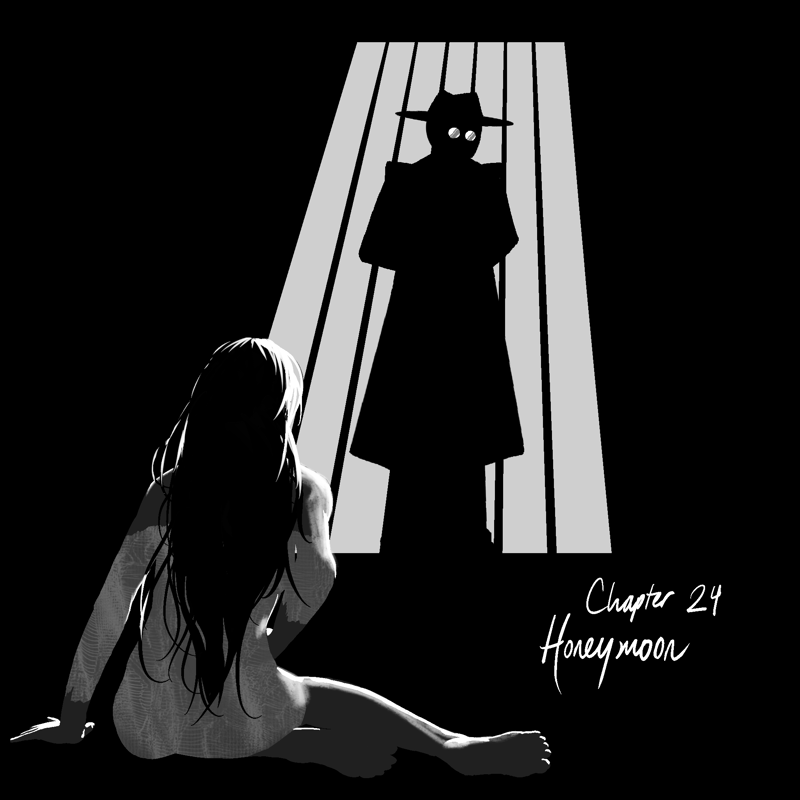
Usually, a princess’s honeymoon is spent with her new husband, enjoying lavish parties and grand feasts. Imogen’s honeymoon was spent alone in a jail cell, slowly dying from thirst and hunger.
What had gone wrong? What had Edgar forgotten? She had trusted him so completely that she never bothered to ask if there was anything missing from their supposedly foolproof plan. But what could possibly be missing? He had been planning their wedding and grand reveal for literal years—ever since, barely three years ago, the two unlikely betrothed shared their first kiss in the library rafters, falling deeply and irrevocably in love. After that, Edgar threw himself into his master plan. Sometimes it was all he talked about, not that Imogen ever grew tired of hearing about it. It sounded too good to be true. She supposed, now, that it was.
Maybe it was the rush that ruined the plan. They had decided to postpone the wedding until Edgar, the younger of the two, turned eighteen, since Imogen’s age was merely a rough estimate—though it came not a moment too soon. She had missed her monthly bleeding again. What was it now, perhaps the third month without it? The fourth? It had always been irregular, but now, the signs were unmistakable. She was expecting. When she told him, Edgar was delighted.
“A man couldn’t ask for a better birthday present,” he proclaimed, “than to learn he is going to be a father!”
But the delight turned to anxiety as the young lovers realized that the clock was now ticking. There was no time to waste. That night, as soon as darkness fell, they met in the gardens. Edgar brought a horse, a saddle, and a pack full of food. Then they sped off into the night.
Edgar drove the horse as hard and fast as it would manage, putting as much distance between them and the city as possible. By the time the sun rose, they were miles away, having reached a small village with a humble church. Ideally, Edgar had hoped to contact the priest ahead of time and pay for his loyalty, but knowing that the alarm bells would ring as soon as someone noticed his absence, he had no choice but to barge right into the chapel and flag down the first clergyman he saw. Edgar and Imogen were married right then and there by an inexperienced priest barely older than they were. The witnesses included the altar boy, the pianist, and a half dozen very confused parishioners who were waiting for morning mass to begin. With the marriage certificate signed and sealed, the newlyweds believed the worst to be over with. But the ink had barely dried before they were proven wrong.
To this day, Imogen has a hard time remembering what happened after they returned to the capital city. Her next clear recollection is being jostled around by castle guards and searched head to toe for weapons, before being roughly shoved into a windowless jail cell and shackled to the wall.
Imogen had no way of telling how much time had passed in that cell. She was already exhausted, having not slept the night before. But the rough stone floor, the ails of her early pregnancy, and her fears for the future stole away any chance at sleep. Her only reprieve in all of that time was a small flask of stale water, which she was careful to ration, not knowing when it would be filled again. Intermittently, the cell door would open and let in one or two castle guards. They hurled accusations at her. She had seduced the prince, cast some sort of spell on him, drugged or blackmailed him. She was lying about her pregnancy, Edgar wasn’t even the father, or perhaps she wasn’t pregnant at all. They demanded the truth, and even when she told it, that she and Edgar were truly in love, they did not believe her. They would ask over and over until she cried. Then they would leave her alone again. Every time Imogen thought it was the last time, though, they would return. Demanding the truth. Refusing to let her tell it. Over and over.
Days, possibly weeks, must have passed before Imogen glimpsed even a sliver of hope. It came at her darkest hour, while she lay helplessly on the filthy cell floor, certain that she would die. At least it will all be over soon, she thought. As she clutched at her stomach, the earliest roundness of pregnancy now starkly apparent against the sharpness of her ribs and hips, a wave of sorrow washed over her. I’m so sorry, my baby. At least we will be together.
The cell door opened. Then a soft, warm light filled the cell. A hand rested gently on her shoulder.
“Imogen,” said a man’s voice. “My name is Peter Pym. I’m here to help you.”
Gently, he helped her sit up. Imogen blinked against the light, the first she had seen in days. Mr. Pym was not alone; there were guards with him, but he ordered them about with an efficiency and authority that told Imogen who was really in charge. He instructed the guards to remove her shackles, fetch a blanket, and bring her soft bread and bone broth. They were the most delicious things Imogen had ever tasted.
“Drink slow, so you don’t get sick,” Mr. Pym told her. And though it was a monumental effort not to gobble everything down as quickly as possible, she obeyed.
Gradually, between bites of bread and sips of broth, she told him everything. “I’m telling the truth,” she pleaded. “You have to believe me.”
“I believe you,” he said calmly.
“No one else does. They’re saying—they’re saying I don’t love him. That I just want to steal his crown. But I don’t care about the crown anymore. I don’t care about anything. I just wanted to marry him, raise our child together, and be happy.”
Mr. Pym listened patiently. He was so patient, even when Imogen broke down crying, unable to stop until she had vomited up all of the bread and broth, an agonizing experience that left her completely numb and still. He demanded the guards mop up the mess at once and bring fresh water. Once they were done, and once he was satisfied that Imogen could keep down the water, he leaned close to her and spoke.
“I know you are telling the truth, Imogen. I really do.”
“Really?”
“Yes. But I should also tell you the truth. The Queen is calling for your execution. She has very strong evidence to suggest your marriage was flawed, and that Prince Edgar did not consent to it.”
“But he did!” Imogen protested. “It was his idea all along, he planned everything! He wanted to marry me—he really, truly did!”
“And I believe you.”
“No! I don’t know if you do!”
“Imogen. Listen to me, I am on your side. I work for Prince Edgar. I am not trying to hurt you—I am trying to help you.”
Something about his voice, low and resonant, told Imogen that he was genuine. Come to think of it, Mr. Pym did look familiar. Perhaps she had seen him in passing, doing work for Prince Edgar. If he was really Edgar’s clerk, then maybe, just maybe, she could trust him…
“I don’t want to die,” she whispered.
“And you won’t,” said Mr. Pym, “if you work with me.”
Mutely, she nodded.
“Now,” he continued, “you mentioned the crown. That you don’t care about it…anymore. What did you mean by that?”
The questioning continued. It was far more comfortable than the guards’ interrogation, as Pym allowed her more bread and broth throughout it. But it was no easier. She wanted to tell him, over and over, that she was innocent. That she loved Edgar. Pym only ever replied that he believed her, but the Crown would not. They had evidence against her. That she was trying to swindle him. That she had drugged and raped him. That her baby was not even Edgar’s. They would not believe her truth. So he suggested…another truth. Another, alternate version of events. And once she had repeated it back to him, and after he had written it all down, he stood up with a smile.
“Thank you, Imogen,” he said. “That wasn’t so hard, was it? Now you can go home.”
Imogen just stared at the floor. “I don’t have one,” she rasped. “I live here, in the palace.”
Mr. Pym frowned. But then he nodded. “We can find another home,” he suggested. “Somewhere safe. Somewhere you can raise your baby. Would you like that?”
“Yes.”
“Good. Good.”
As he left, Imogen just barely made out the voices of the guards, all the way down the hall. “That’s how it’s done, huh?” “Only took, what, two hours? I’m impressed.” Then, Mr. Pym’s voice, almost low enough that she couldn’t hear him, replied.
“You’ll always catch more flies with honey,” he said.
The official version of Imogen’s statement is locked in a secure cabinet somewhere in Pym’s office, along with my entire dossier and the case file for the annulment proceedings. That statement was the nail in the coffin on Imogen’s and Edgar’s marriage, proving once and for all that the marriage was based on a lie. Mom does not know exactly what Pym wrote down that day, but she remembers what she told him in perfect detail. He helped her rehearse and refine it so many times that she will never forget it for as long as she lives.
I make this statement of my own free will, transcribed by Peter J. Pym, Royal Notary and Clerk of Records.
My name is Imogen Rossach. I am nineteen years old. I am a slave and bondservant to the kingdom of Saol Eile. I have no parents and no property. I was born in the Alamaric Isles, transported to the capital city, and raised in the palace as a chimney-sweep. Here, I endured horrible living conditions and endless working hours. I genuinely believed that I would live my whole life and die as a slave. Then I met Edgar.
I knew at once that he was a prince. I knew he had the power to change my life. I knew he wanted to get away from his arranged marriage, and the best way for him to achieve that end was to marry someone else. I knew that if I married him, I would not be a slave any longer, but a princess. He was lonely and needed a friend, so I became his friend. Later, he wanted a lover, so I became his lover. And most recently, he wished for a child, so I blessed him with child. All of it was a lie. I did not tell him that I only wanted one thing from him in return—to become a princess. I told him I was pregnant on his eighteenth birthday, and we eloped at once. We fled the city by horseback and married the very next morning. And so I got my wish. By marriage, I became a princess.
But I realize now the gravity of my sin. Prince Edgar married me because he believed we were in love, but I only married him for his crown. I manipulated my prince for my own selfish gain. Now I am filled with remorse for what I have done. I don’t care about the crown anymore. If marriage to him makes me a princess, marriage to me makes Edgar a slave. I cannot live with that guilt. I confess to the crime of deceiving Prince Edgar and coercing him into a marriage with me, a slave far below his status.
For the foregoing reasons, I humbly request the church of Saol Eile annul our marriage, release Prince Edgar from his duties as a husband and father, and banish me from the royal palace, now and forevermore.
Signed,
Imogen Rossach
a.k.a. Amira Al’Kilic
Comments